
Feeling Overworked and Underappreciated? So Are Your Kidneys
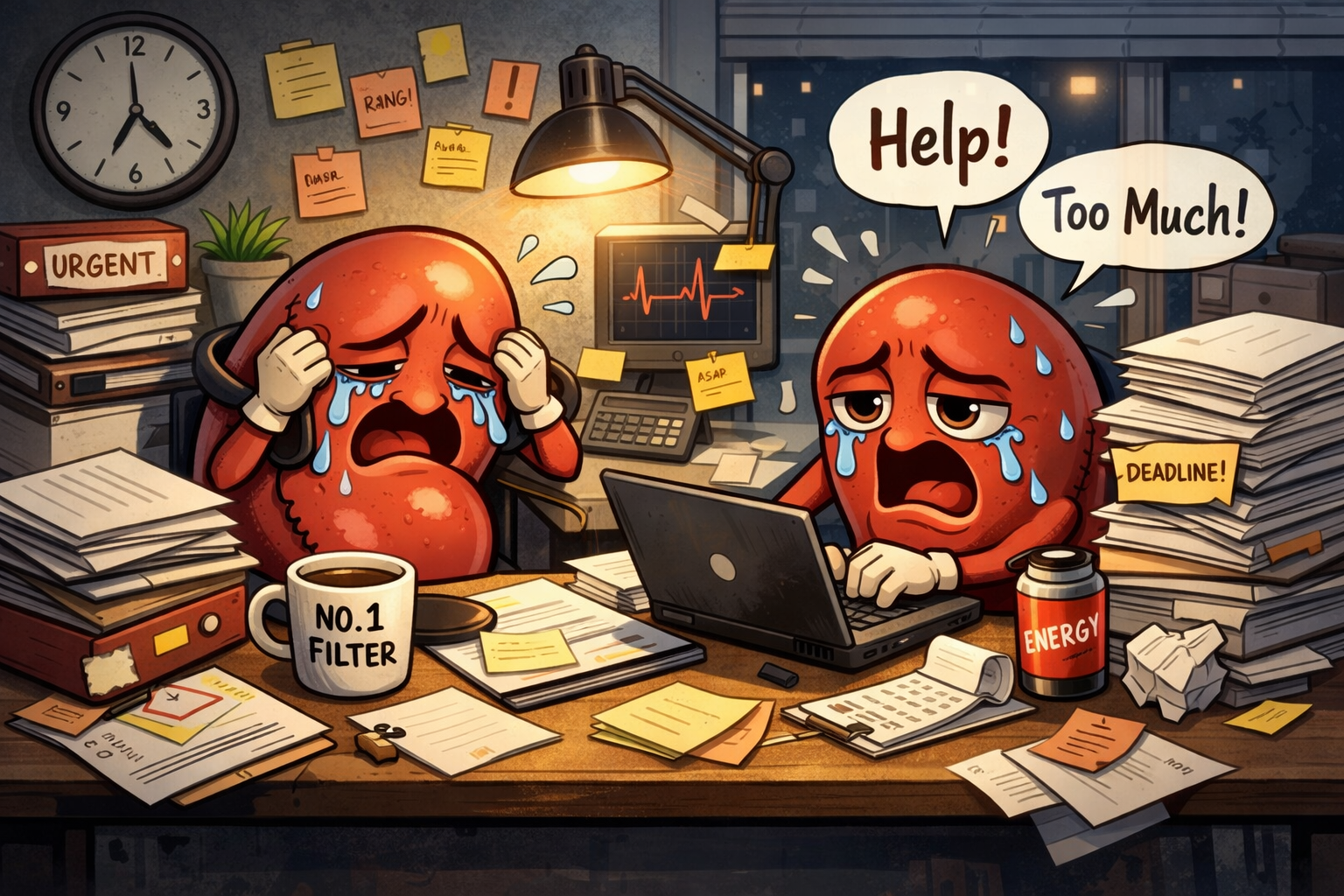
Most people have no idea what their kidneys actually do. To many, kidneys are just the spot you get punched in mob movies, the organs you vaguely remember having two of, or the plot device that ends with you waking up in an ice bath in a foreign country.
It’s usually not until someone realizes they haven’t peed in a week or their ankles have swollen to the size of grapefruits that they discover they’ve been beating up their kidneys for decades, none the wiser, and without any help from action-movie wiseguys.
So listen up, this is the record-scratch moment: about 1 in 7 U.S. adults already has chronic kidney disease, and up to 90% have no idea because it usually shows up with zero drama and zero symptoms.
Each year, 130,000+ people are told their kidneys have failed and they now need dialysis or a transplant to stay alive. That does not happen overnight. It builds for years out of everyday habits. Like when you take four Advil instead of the recommended two. Yeah. Do that long enough and you’ll end up on the transplant list. Medication-related (mainly NSAID) kidney damage is one of the most common reason people go into kidney failure.
Been living on four cups of coffee a day and a glass of water every other? Yeah. Chronic dehydration doesn’t just make you feel like garbage. Yeah, that can crash your kidneys faster than Sonny’s car getting shredded by the toll booth in The Godfather.
So what the heck do your kidneys do?
Your kidneys run a 24/7 operation. No days off. No closing time. More organized than most crime families. They:
Remove waste from your blood
Remove extra water (which, everything, even marinara sauce has water in it)
Keep your blood chemistry stable so your heart, nerves, and muscles can do the job
And how do they get rid of all this junk? They make it rain, urine. Yes, you wouldn’t have to run to the bathroom in the middle of a movie if it weren’t for your kidneys, or stop at rest stops with no toilet paper on road trips.
What your kidneys actually deal with all day
Just by being alive, you’re dirty. Just by being alive, you’re dirty. Every cell in your body is making waste all the time from normal metabolism, muscle use, and breaking down food. Stuff like:
Urea from breaking down protein
Creatinine from normal muscle activity (workin’ on that gyat)
Uric acid from food and cell turnover (that’s what burnout does, high churn)
Extra acids from normal metabolism (not acid reflux acids. Sorry)
Extra water that would otherwise raise blood pressure and cause swelling (and cause you to finally try gua sha)
Extra salts and minerals like sodium and sometimes phosphorus or potassium
Drug leftovers from many medications (like aforementioned Advil)
At the same time, they constantly fine-tune:
Water and sodium for fluid balance and blood pressure
Potassium for heart rhythm and muscle function
Calcium and phosphorus for bones, muscles, and nerves
Acid and bicarbonate for your blood’s pH
They also help regulate blood pressure, support red blood cell production, and help keep bones strong. Overachievers, honestly.
Why kidney problems are easy to miss
Early damage can be microscopic and symptom-free. You can lose a lot of kidney function and still feel normal. That is why blood and urine tests often catch kidney trouble long before your body sends up any flares.
When symptoms finally show up
They tend to be boring and easy to brush off:
Swelling in ankles, feet, or around the eyes
Foamy urine (often a sign protein is leaking)
Fatigue that does not match your sleep or activity
Changes in urination, especially more at night or much less overall
Shortness of breath or feeling puffy from fluid buildup
By the time these appear, kidney function has often already dropped. This is why labs beat vibes.
Five everyday habits that stress your kidneys
1) Living dehydrated
Low fluid means lower kidney blood flow and more concentrated waste.
Do: Drink regularly through the day. Increase fluids with heat, illness, or exercise.
2) Frequent NSAID use (Advil, Motrin, Aleve)
These reduce protective blood flow inside the kidneys and can trigger sudden injury.
Do: Lowest dose, shortest time. Avoid routine use unless your clinician says it is safe.
3) “Wellness” supplements and detoxes
Some are directly toxic to kidney cells or overload mineral handling.
Do: Skip detoxes. Only take supplements your clinician actually recommends.
4) High-protein or creatine-heavy fitness trends
They raise waste load and can strain filtration in people with hidden risk.
Do: Aim for moderate protein unless a clinician advises otherwise.
5) Long-term acid-reflux meds (PPIs like Prilosec, Nexium, Prevacid)
Linked to kidney inflammation and higher CKD risk with long-term use.
Do: Use the lowest effective dose for the shortest time. Recheck the need if you have been on one for months.
Bottom line: A lot of kidney damage comes from normal habits. You usually do not feel it happening. You see it later on labs.
The big levers that actually protect your kidneys
Blood pressure
High pressure batters the filters and scars them over time.
Do: Know your target. Check at home. Take meds consistently if prescribed.
Blood sugar (diabetes)
High sugar damages filter walls and small vessels, making filters leaky and speeding scarring.
Do: Keep A1C in range. Take meds as directed. Ask about urine protein checks.
Salt
More salt means more fluid, higher pressure, and more stress on the filters all day.
Do: Cook more. Read labels. Assume restaurant food is salt-heavy.
Hydration
Low fluid lowers kidney blood flow and concentrates waste.
Do: Drink regularly across the day. Increase with heat, illness, or exercise.
Limit NSAIDs
One of the leading causes of kidney failure is NSAID overuse. Sometimes that is just one extra dose, repeated.
Do: Read labels. Take correct doses. Pay attention to timing between doses.
Movement
Activity lowers average blood pressure, improves sugar handling, and improves circulation to kidney tissue.
Do: Walk most days. Break up long sitting. Aim for consistency.
Sleep
Poor sleep raises stress hormones, blood pressure, blood sugar, and inflammation. All bad for filters.
Do: Keep a regular schedule. Limit late caffeine and screens. Treat sleep apnea if present.
Bottom line: Each of these changes pressure, flow, or chemical stress inside the kidney filters. That is the damage pathway.
Small habits, done daily, protect kidney function long before symptoms show up.
How to stay ahead of your kidney health
Kidney problems usually show up on labs before you feel anything. Staying ahead is about watching a few numbers and asking better questions.
1) Know your basics
Ask for:
Creatinine and eGFR (how well your kidneys are filtering)
Urine protein or albumin (early sign of filter damage)
Why it matters: Trends over time matter more than one single result.
2) Ask simple, direct questions
“Are my kidneys normal for my age and health?”
“Has my eGFR changed over time?”
“Is there any protein in my urine?”
“Are any of my medicines hard on my kidneys?”
3) Bring your full meds and supplements list
Include pain relievers, reflux meds, supplements, teas, powders.
Why it matters: Many common products affect kidney blood flow or workload, especially in combination.
4) Watch risk, not just symptoms
Higher risk includes high blood pressure, diabetes, heart disease, family history, or abnormal labs.
Why it matters: This is when prevention works best.
5) Know when to ask for a closer look
Ask about referral or more testing if:
Your eGFR keeps falling
You have persistent protein in your urine
Blood pressure or blood sugar stays hard to control
You have repeated kidney stones or infections
Final takeaway
Kidney health is not about waiting to feel sick. It is about tracking a few key numbers, asking clear questions, and adjusting early. That is how you protect kidney function while you still feel fine.