
Jean B.
Grandmother to Owen | Ocean Lover | Sea Glass Hunter | Bird Feeder Filler
Colon Cancer Survivor
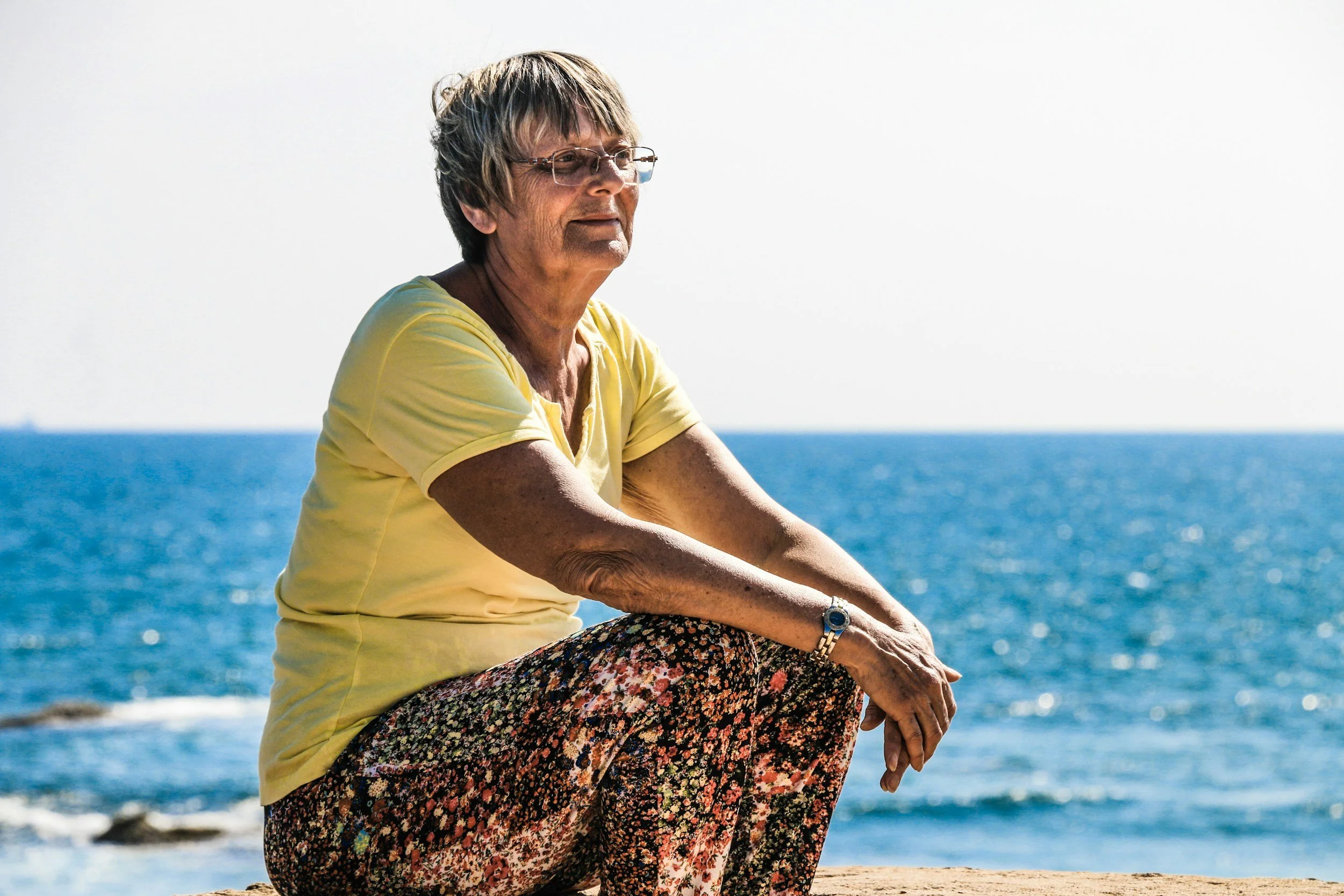
Jean still talks to her husband every morning. Not in a sad way. Just the way people do after nearly fifty years of marriage. She’ll pass the kitchen hook where his old baseball cap still hangs and say, “Morning, Harold,” before pouring her coffee.
Two years before Jean’s diagnosis, Harold died of colon cancer. It had been a four-year battle they fought together — treatment by treatment, appointment by appointment, different opinions from different specialists. They spent long nights researching clinical trials on their own as Harold’s cancer continued to spread despite chemotherapy and immunotherapy.
With a serious diagnosis like cancer, certain words begin to take over your life. Staging. Margins. Oncology. Neutropenia. They start appearing more often in conversation than words like dinner, vacation, future, or “our golden years.”
When Harold died, Jean lost the love of her life, her closest companion, the person she shared everything with. In no longer caring for him, she felt she had lost her purpose. But there was one thing she was grateful to see gone: cancer.
Two years later Jean had begun to find her footing again. She was taking long walks on the beach and smiling when the scrub jay yelled at her from the bush near the path. She continued seeing their family doctor every six months — something she insisted on after Harold hadn’t seen a doctor for years before his diagnosis. She took her vitamins down to the minute and her omega fatty acids every morning. She had always been as fit as a fiddle.
But this time, instead of the usual card in the mail saying everything looked good, the phone rang.
The voice on the other end was careful. “Jean? Take a seat. I wanted to call you personally.”
It was their doctor.
Jean made her way to the kitchen table.
“There’s a mass,” he said. Jean held her breath. “And Jean… it looks like it may be exactly what Harold had. Colon cancer.”
She reached calmly for the same yellow legal pad she had used during Harold’s illness and began writing everything down: surgery consultations, imaging, oncology referrals, treatment decisions. It was eerily familiar.
After they hung up she stared at the page for a moment and sighed. “Well, Harold,” she said into the quiet kitchen, “you always did say you’d leave me little reminders after you were gone.” She laughed into the empty room. Then she sat there for five minutes — not sad, not angry, just still.
When the five minutes were up, Jean stood, walked over to the hook, grabbed Harold’s baseball cap, placed it firmly on her head, flipped open the legal pad, and began the same journey she and her husband had walked six years earlier.
Which surgeon? Which hospital? Which treatment path?
Every appointment brought new information. Some reassuring. Some confusing. The system itself felt almost as overwhelming as the diagnosis, even after she had navigated it once before.
Jean had always been practical. She still organized her sea glass by color after every beach walk. She kept a garden that produced more tomatoes than any one person could reasonably eat. And she had a grandson named Harry — Harold — a tribute to the father her husband had been. Harry was a freshman in high school when Jean received her diagnosis.
Jean had already decided her goal.
Harold’s had been celebrating their 40th wedding anniversary. Hers was simpler.
“I’m going to see that boy graduate,” she told her daughter. “Your father would never forgive me if I missed it.”
Through Navocate Health, Jean connected with a patient advocate named Judith. Judith helped her review the newest developments in cancer care and served as a sounding board as Jean weighed the decisions ahead. Instead of rushing toward the first recommendation, they studied imaging results, discussed surgical options, and prepared thoughtful questions for each specialist she met.
Jean’s method never changed. She brought her yellow legal pad to every appointment and every treatment. She wrote everything down. She asked questions when something didn’t make sense. She also kept a list of nurses she never wanted inserting an IV again — and those she requested every time.
One doctor paused during an appointment and smiled at her notes. “Mrs. B., you’re very organized. And you’re always wearing that same hat.”
Jean looked up calmly. “Well doctor,” she said gently, “this is rather important, wouldn’t you say? If it hadn’t been for my notes I wouldn’t have remembered it was you who mistook my husband’s colon cancer for prostate cancer.”
She never saw that doctor again. Jean and Judith had a good laugh about that one when Jean later called to ask whether it was time to push for another PET scan.
Her treatment included surgery and follow-up care, and like many cancer journeys there were weeks that tested her strength. But she kept moving forward — always with the yellow legal pad and Harold’s baseball cap.
Months passed. Then a year. Her strength returned. The garden filled again with tomatoes and herbs.
And one bright afternoon last spring, Jean sat in the high school bleachers as her grandson Harry walked across the stage in his graduation gown. She clapped until her hands hurt, then took Harold’s baseball cap and tossed it into the air with the graduates.
“Well,” she whispered to herself, smiling, “we made it, Harry. We made it, Harold.”
The next day at Harry’s graduation party, Jean brought no gift. Instead she pulled her grandson into a tight hug and placed the baseball cap on his head.
“He’d be so proud of you,” she said softly. “You know he’s always with you.”
She squeezed his shoulder, stepped back, and watched him laugh with his friends.
Then Jean did what she had learned how to do again.
She kept moving forward.