
Frank M.
Back-Nine Optimist | Devoted Partner | Yacht-Rock Enthusiast | Salt-Shaker Retiree
Heart Attack & Stroke Survivor
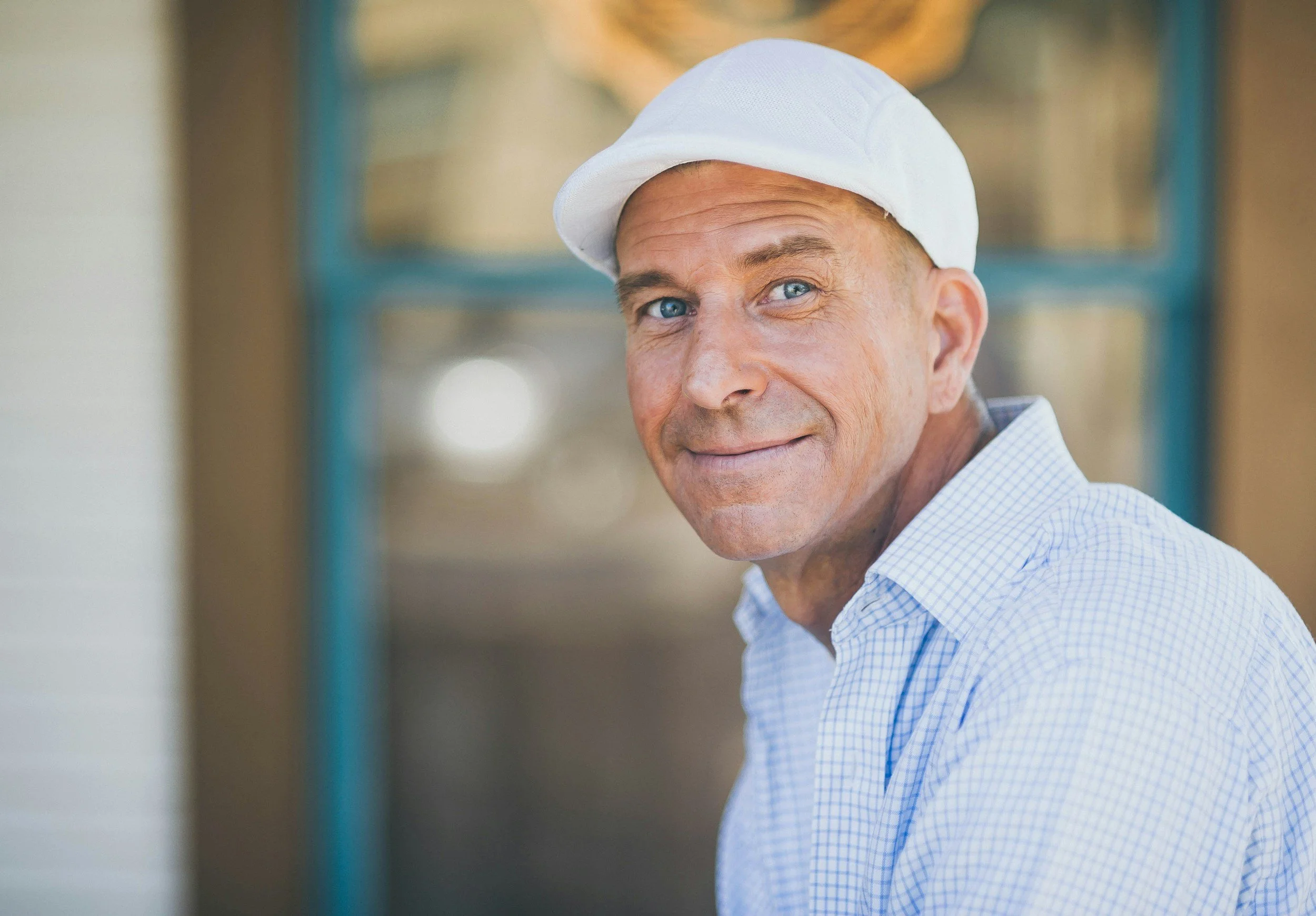
Frank likes to say that the most dangerous thing he did at fifty-two was order breakfast.
Not skydiving.
Not golf in the rain.
Breakfast.
“It was eggs, bacon, hash browns,” he says. “The kind of breakfast cardiologists use as a warning example.”
He and his partner Arthur had been sitting in a diner they liked after an early round of golf. Frank remembers feeling strange halfway through the meal. Not dramatic. Just… wrong.
His arm felt heavy.
Then his words started coming out slowly.
Arthur noticed it before Frank did.
“He looked at me and said, ‘Frank, why are you talking like that?’” Frank remembers.
Within minutes the situation moved fast. Paramedics. Sirens. A hospital room full of people asking questions Frank could barely answer.
The diagnosis came in pieces. First, a heart attack. Then something even harder to comprehend. A stroke. Doctors later explained that the heart attack had led to a clot that traveled to his brain, causing an ischemic stroke. In medical terms it was a complication. In plain terms, it meant everything changed overnight.
Frank survived the emergency. But survival, as he quickly learned, was only the beginning.
“I thought the scary part was over once I woke up,” he says. “Turns out that was just the opening act.”
The stroke had affected his speech and coordination. Simple things felt suddenly unfamiliar. Walking across a room required focus. Words sometimes disappeared mid-sentence.
Rehabilitation became a new full-time job.
Physical therapy.
Speech therapy.
Occupational therapy.
Days that once involved golf and work were now measured in small victories.
Holding a coffee cup without spilling.
Walking across a room without losing balance.
Finishing a sentence without searching for words.
Arthur was beside him through all of it. Frank often jokes that Arthur’s medical training came from exactly one source.
“Arthur watched a lot of ER in the nineties,” Frank says dryly. “So naturally he assumed George Clooney had prepared him for this.”
Arthur laughs when Frank says it, but the truth behind the joke is real. Loving someone through a major medical event is nothing like hospital television shows portrays it to be.
“I wanted to help,” Arthur says. “But half the time I had no idea what the right thing was. Should I encourage Frank to push harder in therapy? Or tell him to rest? Should I correct words when Frank struggled to speak? Or wait patiently?”
Even the small decisions and conversations held anxiety and weight.
“That’s the part nobody prepares you for,” Arthur says. “You’re terrified of doing the wrong thing.”
Through NAVOCATE Health, they connected with an advocate who helped them navigate not just the medical system, but the emotional reality of recovery.
Appointments multiplied quickly after the stroke. Cardiologists. Neurologists. Rehabilitation specialists. Medication changes. Dietary recommendations.
The system itself felt overwhelming.
Tarvis, their advocate, helped them organize the information and understand what mattered most. But just as importantly, they helped Arthur learn how to support Frank in ways that strengthened their relationship instead of straining it.
“Someone finally explained that recovery from stroke isn’t linear,” Arthur says. “Some days look great. Some days look like you’ve gone backwards.”
That understanding changed the way they approached the process together. Instead of chasing perfect progress, they focused on steady, spaghetti progress.
Frank learned patience and to let go of perfectionism (somewhat). Arthur learned when to step in and when to simply sit beside him, that just being present was the most important thing.
“It turns out supporting someone is a skill,” Arthur says. “You have to learn it.”
Frank’s recovery took years.
Not months.
Years.
And all through it Travis supported them. Whether is be a replying to a late night text asking if Arthur should be concerned Frank had been in the bathroom for too long, or weekend Zoom’s when Frank was needing to vent about Arthur hiding the bacon bits he bought just for a tiny taste to put on his salads.
Frank rebuilt strength slowly. His speech returned gradually. Balance improved with persistent therapy.
Along the way there were moments that felt enormous, and it was Travis who they called first to celebrate.
The first time he walked a full mile.
The first time he finished a round of golf again.
“I shot a terrible score,” Frank says. “But I was thrilled to be terrible.”
These days Frank and Arthur still play early morning golf whenever they can. They travel to their timeshare in Hawaii a few times each year, where Frank walks the beach every morning.
His breakfast order looks different now. A lot less salt. Which he often jokes was the hardest hurdle to overcome. But he still enjoys what he calls “a proper golfer’s lunch” after a round: grilled chicken, iced tea, and occasionally a burger, carefully negotiated with his cardiologist, and Arthur.
Looking back, Frank says the medical crisis tested more than his body.
“It tested our partnership,” he says.
Arthur nods.
“When someone you love nearly dies,” he says, “you realize how much of life you’ve taken for granted.”
NAVOCATE Health helped them navigate the complicated path through recovery, but it also helped them protect something equally important. Their ability to move through it together.
Today Frank stands on the golf course, club in hand, sunlight coming up over the fairway. He pauses sometimes and looks around before his first swing.
“I’m just grateful to still be here,” he says.
And then he smiles.
“Well,” he adds, “that and grateful Arthur never tried to treat me with anything he learned from George Clooney.”